Ask four Americans to define barbecue and you'll get four different answers. The four most iconic regional styles — Texas, Carolina, Kansas City, and Memphis — differ on almost everything that matters: the meat, the sauce, and the philosophy of the pit. If you love beef and smoke, Texas is your lane. If you want tangy pork, head to the Carolinas. Sweet, saucy variety points to Kansas City, and Memphis splits the difference with its famous wet-versus-dry rib debate. Here's how to tell them apart and pick your style.
Introduction to America's Iconic BBQ Regions
Barbecue in the United States is less a cooking method than a regional identity. As Truth BBQ's Matt Coenen puts it, the tradition "goes far beyond" smoked meat, "encompassing tradition, pride and regional identity." What's on the grill, how it's cooked, and what it's served with can look wildly different depending on where you are.
Food-industry guides consistently identify the same four regions as the most recognized renditions of smoked meat in the country, with their techniques, rubs, and sauces copied far beyond their home turf. Texas is beef country, the Carolinas are pork country, Kansas City is the sauce-loving "big tent," and Memphis is rib territory. Understanding those anchors — meat, sauce, and technique — is the fastest way to find your own preference.
Texas BBQ: The Art of the Brisket
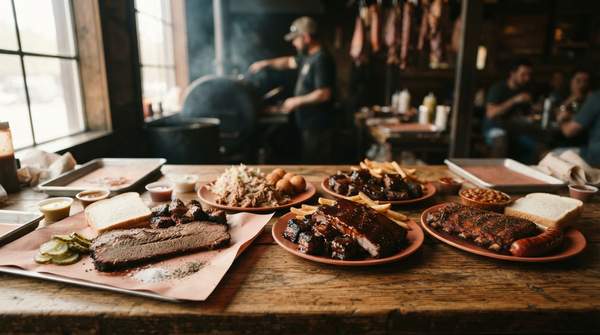
Texas barbecue is a beef-first tradition, and its minimalist approach to seasoning and sauce is what sets it apart. The rub is often nothing more than salt and pepper, and the bark — that smoky, crackly crust on the outside of the meat — is considered just as important as tenderness. In Texas, the smoke does the heavy lifting.
Sauce, if it appears at all, is usually served on the side, often tomato-based and slightly sweet or spicy. The state is big enough to hold multitudes, though: East Texas leans toward chopped beef and saucier, more tender cuts, South Texas sometimes incorporates barbacoa and Mexican flavors, and West Texas prefers open-pit cooking over direct heat — a faster, more rustic style. Across all of it, the sides stay simple: white bread, pickles, onions, potato salad, and smoked beans, meant to complement rather than distract.
Carolina BBQ: Pork Perfection with Tangy Traditions
Head east and the philosophy flips entirely: in the Carolinas, pork is king. Carolina barbecue centers on pork shoulder, pulled pork, or — in some parts — whole-hog cooking, where the entire pig is smoked low and slow over wood coals. But the defining feature is the sauce, and there's no single answer to what "Carolina BBQ sauce" means.
Eastern North Carolina favors a thin, vinegar-and-pepper sauce. In western North Carolina, the Lexington style keeps the vinegar base but adds a touch of tomato while staying tang-forward, with chopped pork and slaw served alongside or on top. South Carolina goes its own way with mustard-based "Carolina Gold" sauces — tangy, slightly sweet, with a distinctive mustard bite — which Grill Masters Club notes work especially well on pulled pork sandwiches and smoked chicken. The sauce is often used as a mop during cooking and served with the meat.
Kansas City BBQ: The Sweet and Saucy Standard
Kansas City is the great "big tent" of American barbecue: lots of meats, lots of approaches, and a signature love for thick, sweet, tomato-based sauce. Rather than a single primary meat, it offers a smorgasbord of slow-smoked options — pork ribs, burnt ends, brisket, and chicken among them.
The style's rubs lean sweet, with brown sugar as the base ingredient; WebstaurantStore's guide notes that traditional recipes call for a two-to-one ratio of brown sugar to paprika. That sugar shapes the technique, too: pitmasters keep their heat low to prevent the caramelizing sugar from charring and blackening the meat. The thick, molasses-sweet sauce is generously coated on meats during the last stages of cooking or served on the side.
Comparing America's Iconic BBQ Styles
The table below lines up the four styles against the same three criteria — primary meat, sauce profile, and defining characteristic — so you can match a style to your taste at a glance. Beef versus pork, sweet versus tangy, sauce-forward versus smoke-forward: those are the axes that separate them.
| Region | Primary Meat | Sauce Profile | Defining Characteristic |
|---|---|---|---|
| Texas | Beef, especially brisket | Minimal; tomato-based and slightly sweet or spicy, served on the side | Slow smoking with a salt-and-pepper rub; bark and smoke over sauce |
| Carolina | Pork — whole hog or shoulder | Vinegar-based (thin and peppery in the east, tomato-touched in Lexington); mustard-based Carolina Gold in South Carolina | Whole-hog or shoulder smoking with tangy sauce used as a mop and served with the meat |
| Kansas City | Wide variety: pork ribs, burnt ends, brisket, chicken | Thick, sweet, tomato- and molasses-based | Sauce-centric variety; sweet brown-sugar rubs cooked low to avoid charring |
| Memphis | Ribs and pulled pork | Optional — the wet-versus-dry distinction | Wet ribs brushed with sauce before, during, and after smoking; dry ribs coated in rub and served without sauce |
One clarification worth making: in Memphis, "wet" and "dry" refer to preparation, not texture. Wet ribs are sauced throughout the cook; dry ribs rely entirely on the rub. And note that East Texas chopped beef and West Texas open-pit cooking are regional variations within the Texas column, not the norm statewide.
The Role of Sauce: From Central to Optional
Here's the misconception worth correcting: barbecue is not always defined by sauce. In Kansas City, sauce is the identity — thick, sweet, and slathered on. In Texas, it's nearly an afterthought, offered on the side so the smoked meat can speak for itself. Memphis makes sauce a genuine choice, splitting its ribs into sauced and rub-only camps.
The Carolinas sit somewhere in between, but with tang rather than sweetness as the through-line. As Truth BBQ frames it, Texas "trusts the smoke to do the heavy lifting," unlike the sauce-centric styles of Kansas City or the vinegar tang of Carolina. If you've been judging all barbecue by its sauce, you've been missing half the tradition.
Choosing Your BBQ Adventure
So which style is yours? If you're a beef person who wants pure smoke and a crackly bark, start with Texas brisket. If tangy pork — pulled, chopped, or whole-hog — sounds like your kind of sandwich, Carolina is the move, and you can even pick your sauce region: vinegar, vinegar-tomato, or mustard. If you want variety and a sweet, sticky glaze on everything from ribs to burnt ends, Kansas City delivers. And if you like your ribs sauced, Memphis wet ribs are the classic; rub purists should order them dry.
Choosing Your Next BBQ Experience
Based on your preference for meat type, sauce prominence, and flavor profile, select one of the four iconic American BBQ styles to try at a restaurant or attempt to cook at home. The decision comes down to three questions: beef or pork, sweet or tangy, and whether sauce should be the star or the sidekick.
A successful choice will result in a satisfying BBQ experience that aligns with your personal taste, whether it's the smoky beef of Texas, the tangy pork of Carolina, the sweet and saucy variety of Kansas City, or the dry-rubbed ribs of Memphis. Pick one, order its signature cut, and you'll know within a single meal which regional tradition you belong to.
Sources
- 4 Different BBQ Styles and What Makes Them Unique — Truth BBQ
- Definitive Guide to American BBQ Styles — Grill Masters Club
- Types of BBQ — WebstaurantStore