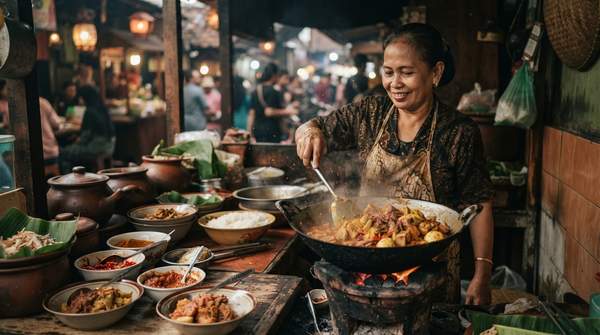
Indonesia has officially launched the second edition of its Wonderful Indonesia Gastronomy (WIG) program for 2026, aiming to significantly boost international tourism by showcasing the nation's rich culinary heritage. The program, themed "From Local Roots to Global Recognition," commenced on September 26, 2026, at Mangkunegaran Palace in Solo, Central Java, with Minister of Tourism Widiyanti Putri Wardhana inaugurating the event. This year's WIG initiative strategically centers its main activities on Solo and Yogyakarta, running until October 4, 2026, with a clear objective to strengthen Indonesia's position as a world-class gastronomy destination. Strategic Focus on Solo and Yogyakarta: From Local Roots to Global Recognition
The decision to highlight Solo and Yogyakarta for WIG 2026 marks a deliberate and insightful shift from the previous year's program, which focused on the more cosmopolitan hubs of Bali and Jakarta. As Minister Widiyanti Putri Wardhana explained, while Bali and Jakarta serve as vibrant "melting pots" of Indonesian cuisine, Solo and Yogyakarta offer a deeper, more authentic exploration of the nation's diverse local ingredients, distinct food traditions, and unique culinary practices. This strategic choice directly supports the program's overarching theme, "From Local Roots to Global Recognition," by connecting visitors with the very origins and community-rooted heritage of Indonesian gastronomy.
Vita Datau, chair of the Indonesia Gastronomy Network (IGN), further emphasized that food provides a crucial window into the local traditions and identity that shape different parts of Indonesia. She noted that gastronomy extends beyond what is merely served on a plate; it offers a profound way to understand where communities come from, how people live, and what makes each region of Indonesia truly unique. By focusing on Solo and Yogyakarta, regions steeped in Javanese history and ancient culinary practices, WIG 2026 aims to leverage this rich, community-rooted gastronomic heritage as a key tourism asset, encouraging visitors to explore various regions and their cultural narratives through the universal language of food. This approach is designed to unearth and celebrate the authentic roots of Indonesian gastronomy, bringing them to a global stage.
Immersive Culinary Experiences in Central Java
The WIG 2026 program in Solo and Yogyakarta is meticulously designed to offer international visitors a range of immersive culinary experiences that delve deep into local culture and traditions. In Solo, the journey begins with visits to Kampung Laweyan, a historic batik village where visitors can observe traditional crafts and perhaps discover local snacks or home-cooked meals that are integral to daily life. The exploration continues at Pasar Gede, a vibrant traditional market that awakens the senses with its sights, sounds, and aromas. Here, travelers can witness the bustling heart of local ingredient sourcing, from fresh produce to exotic spices, and sample an array of authentic street food vendors. A particular highlight of the Solo experience is the opportunity for Mangkunegaran palace-style dining, offering a rare taste of royal Javanese culinary traditions within a historically rich setting, as reported by TTG Asia.
Yogyakarta's offerings complement Solo's traditional focus with a unique emphasis on the aromatic foundations of Indonesian cuisine. The program includes visits to Rumah Atsiri, an essential oil and spice garden, where visitors can learn about the indigenous spices and botanicals that form the backbone of the archipelago's distinct flavors. Beyond these specific locations, the broader WIG 2026 program in both cities encompasses a variety of engaging events. These include WIG Talks and Forums, which facilitate discussions on sustainable culinary tourism and innovation, an Artisan Market showcasing local producers, a lively Culinary Festival, and special Indonesia Restaurant Months. The program also features collaborations among renowned chefs, designed to highlight the regions' unique culinary offerings and heritage. To amplify these initiatives, the Ministry of Tourism has extended invitations to 18 media representatives and tastemakers, including 13 international participants from prominent gastronomy organizations and media outlets such as Forbes Travel Guide, La Liste, The World's 50 Best, and CNN International.Broader Impact and Future Outlook for Indonesian Gastronomy
Indonesia's intensified push for gastronomy tourism is underpinned by its significant and growing impact on the country's overall visitor numbers. Data from the Central Bureau of Statistics indicates that a substantial 58 percent of international visitors in 2025 engaged in culinary or gastronomy activities. This makes culinary tourism the second most popular tourism activity, just behind urban tourism at 60 percent, and notably ahead of marine tourism, which stood at 53 percent. This high level of engagement clearly highlights gastronomy as a primary motivator for travel to Indonesia, demonstrating its power to draw visitors seeking authentic cultural experiences.
The government is strategically leveraging this appeal to meet ambitious targets, aiming to attract between 16 and 17 million international visitors in 2026. Minister Wardhana expressed confidence that Indonesia's rich culinary diversity provides a compelling and unique reason for tourists to visit, allowing them to discover the culture, traditions, and stories of a destination through its food. This long-term vision, as articulated by the Indonesia Travel website, reinforces Indonesia's position as a world-class gastronomy destination, where every journey is enriched by unforgettable flavors and the narratives behind them. Looking ahead, the Ministry of Tourism plans to continue expanding the WIG program's reach, with discussions already underway to explore Sumatra for the next edition in 2027. This continuous, evolving strategy underscores Indonesia's commitment to uncovering and celebrating the full breadth of its diverse culinary landscape for a global audience.