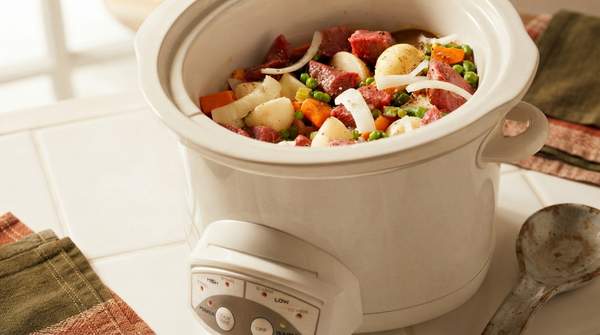
Slow cooking creates its magic through two distinct, time-and-temperature-dependent processes: the conversion of tough collagen into silky gelatin, and the development of deep flavor through high-heat browning followed by low-heat transformation in a moist environment. Collagen begins melting into gelatin around 160–170°F, but the unwinding of its protein helices takes hours, which is why tough, connective-tissue-rich cuts like brisket, chuck, skirt, and shank reward patience while tender cuts would only dry out. Understanding both processes—and how to control them—turns an afternoon of simmering from a gamble into a reliable craft.
The Magic of Slow Cooking: Transforming Tough Cuts
Cheap cuts are not a compromise; they are an opportunity. As the science-of-cooking literature on slow cooking notes, tenderness is rated the most important factor affecting beef palatability, and tough cuts contain large amounts of collagen that require long cooking to break down into rich gelatin. The same sources describe this as a kinetic process: denaturation of the collagen molecule is a function of both temperature and duration of heating, so cooking at low temperatures demands long periods of time to liquefy it. Trade the brisket's patience for a steak's speed and you surrender the very transformation that makes the tough cut worth eating. In naturally tender, collagen-poor cuts, as ThermoWorks' Martin Earl puts it, there is no collagen-to-gelatin transformation in the outer areas to mask dryness—which is why low-and-slow is the wrong tool for a steak.
Collagen's Transformation: The Key to Tenderness
Collagen is the connective tissue that holds muscle fibers together, and it is the villain of tough meat—or the hero, if you cook it correctly. According to the Exploratorium's science-of-cooking guide, when collagen cooks in the presence of moisture it dissolves into gelatin, allowing the meat fibers to separate more easily. This is the essence of tenderizing tough cuts: the structure that once resisted your teeth now dissolves into the broth, which is why a properly braised pot's liquid sets into a jelly as it cools. The temperature thresholds matter. Cooking references place collagen melting from about 160°F, with dissolution really getting going around 170–180°F. The trick is that this is a slow, sustained conversion, not a switch that flips at a single instant.
Flavor Foundations: The Maillard Reaction and Beyond
That liquid simmer cannot, by itself, deliver the deep savory notes we crave. Enter the Maillard reaction—first reported by French scientist Louis Camille Maillard—a chemical reaction between amino acids and reducing sugars that gives cooked meat its brown color and enhanced flavor. It begins at around 140°F and becomes more evident as temperatures climb, producing hundreds of different flavor compounds that can then break down into yet more compounds, depending on the food's chemistry, temperature, cooking time, and presence of air. Because the reaction is favored by high temperatures and a drier surface, the flavor foundation is laid at the stovetop: a hard sear before any liquid enters the pot.
The Exploratorium also points to a second browning route—caramelization, in which sugar melts and decomposes above 338°F/170°C into burnt-sugar complexities—triggered by adding a little corn syrup or brown sugar to the pan after searing.
The Slow Cooker's Dilemma: Tenderness vs. Moisture Loss
Here is the central tension of the whole technique. As the slow-cooking science literature frames it, we face a dilemma: liquefying collagen requires cooking meat to around 180°F and holding it there for long periods, but by then the muscle fibers are well past well-done and can be dried out. Meanwhile, the same moist heat that softens collagen causes muscle-fiber proteins to unfold, firm, and form new linkages across a wide range—coagulating anywhere from 105°F/40°C up to 195°F/90°C. The solution is moisture management.
The evidence points to three routes: braising or poaching in liquid at low temperatures, steaming in high humidity (wrapping in foil with a little water or juice so vapor penetrates the meat), and brining, which adds moisture, helps retention, and contributes flavor. ThermoWorks adds that in high-moisture methods the moisture itself carries heat and flavor into the meat. Notably, a slow cooker's sealed environment permits little to no evaporation—so, per Meathead's AmazingRibs.com guidance, use only small amounts of flavorful liquid like broth or wine, because those flavors will stay concentrated rather than reducing away.
The Slow Cooking Transformation Model
The framework below maps each chemical process to its stage and temperature range, showing how texture and flavor develop in sequence—yet nearly simultaneously—within a single cook. Read it as a control panel: each row is a lever you can pull.
| Cooking Stage | Temperature Range | Primary Chemical Process | Effect on Texture | Effect on Flavor |
|---|---|---|---|---|
| Initial Searing | High heat; Maillard begins ~140°F and intensifies as temperature rises; caramelization above 338°F/170°C | Maillard reaction between amino acids and reducing sugars; some caramelization of sugars | Little texture change—this is a flavor stage | Creates complex, savory, roasted, browned compounds; crucial for depth in the final dish |
| Long, Moist Cooking (Simmering/Braising) | Typically ~160–200°F; collagen melting from ~160–170°F, held around 180°F for long periods | Collagen hydrolysis: sustained heat plus moisture converts connective tissue to gelatin | Fibers separate easily; gelatin gives a rich, unctuous mouthfeel | Deep, savory, umami flavors from protein breakdown and a flavorful broth; minimal evaporation concentrates them |
One nuance the model reveals: Maillard chemistry is not strictly confined to the searing stage. A scientific review notes that temperature, reaction time, and water activity all significantly influence the reaction, and Modernist Cuisine demonstrates that a pressure cooker—by raising water's boiling point—can drive Maillard reactions even in something as wet as soup, producing deeply complex flavors in a fraction of the time. In an ordinary uncovered braise, though, the reliable browning happens at the start.
Achieving Optimal Slow-Cooked Results
To consistently produce tender and flavorful slow-cooked dishes, prioritize an initial high-heat sear for flavor development, followed by a long, moist cooking phase at temperatures sufficient for collagen breakdown but low enough to minimize muscle fiber dehydration. Sear hard, add only a modest amount of flavorful liquid, keep the environment humid, and give the gelatin hours to do its work. The measurable indicator of success is meat that shreds or cuts easily with a fork, accompanied by a rich, savory broth or sauce. Hit that mark and the chemistry has done exactly what you asked of it.
Sources
- Science of Slow Cooking — Scienceofcooking
- Meat Cooking 101: When (and Why) to Cook Low and Slow — ThermoWorks
- Science of Cooking: Braising Makes A Tough Cut Tender — Exploratorium: the museum of science, art and human perception
- Maillard reaction - Wikipedia — EN
- The Science Behind Cooking Meat Low And Slow — Yahoo Life
- The Science Of Slow Cookers — Meathead's AmazingRibs.com