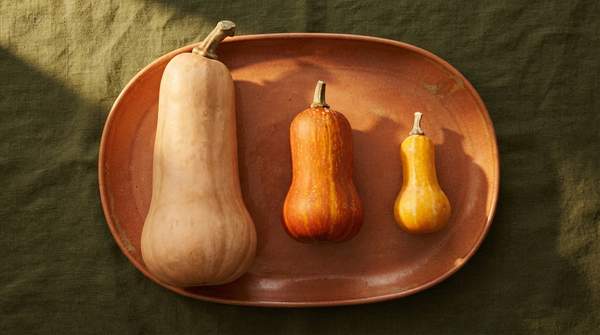
Here's the short answer: choose honeynut squash when you want intense sweetness, a creamy texture, and skin you don't have to peel; choose butternut when you need a milder flavor and firm cubes that hold their shape in soups, stews, and chili. The honeynut—essentially a baby butternut bred for concentrated flavor—packs more sweetness into a smaller package, while the butternut offers volume, availability, and structural staying power. The right pick depends entirely on what your dish needs from its squash.
Honeynut vs. Butternut: Key Differences at a Glance
The two squashes are close cousins with the same oblong silhouette—a thick neck tapering to a bulbous seed cavity—but they diverge quickly in the details. According to produce supplier JVI, a fully ripe honeynut is only about half the size of a butternut. Registered dietitian Lindsay Moyer, writing for the Center for Science in the Public Interest, describes honeynuts as looking like "baby butternuts" whose thin skin is "perfectly edible after roasting"—a genuine convenience, since a smaller squash is also easier to cut safely than a big heavy one. The honeynut is a hybrid cultivar of butternut and buttercup squash, which explains its denser, sweeter flesh.
Flavor Profile: Sweetness and Richness
This is where the honeynut earns its reputation. Moyer puts it memorably: the tiny squash delivers big flavor, "like cranking up the sweetness on a butternut." JVI describes its taste as a sweet butternut-y flavor with hints of honey and pumpkin, noting that it naturally caramelizes and becomes even sweeter once cooked. Butternut, by contrast, offers what Frances Kellar of Cooking With Our CSA calls a "milder, more subtle sweetness," often described as a mix of butterscotch and nutty notes. That milder profile is a feature, not a flaw—it makes butternut a versatile team player in dishes with many competing flavors, while honeynut is the star who wants the spotlight.
Texture and Size: Impact on Preparation and Cooking
Texture is the quiet decision-maker here. Kellar notes that honeynut has a creamier, silkier texture that makes it a fantastic choice for purees, soups, and sauces, while butternut—though still tender—is slightly firmer and holds its shape better when roasted. Size matters practically, too. Moyer points out that petite squashes like the honeynut feed just one or two people per squash, making planning and cooking for small households easy. Butternut's larger size means more yield per squash, which is exactly why Sarah J. Gim of The Delicious Life finds it easier to peel one large squash than a lot of small ones when a recipe calls for volume.
Honeynut vs. Butternut: A Culinary Decision Framework
The table below synthesizes the key culinary dimensions so you can match the squash to your recipe at a glance. The verdict it points to: honeynut wins on sweetness, creaminess, and prep ease; butternut wins on shape retention, yield, and availability.
| Dimension | Honeynut Squash | Butternut Squash |
|---|---|---|
| Flavor Profile | Intensely sweet and rich—like "cranking up the sweetness on a butternut"—with hints of honey and pumpkin; caramelizes when cooked | Milder, more subtle sweetness with butterscotch and nutty notes |
| Texture (Cooked) | Creamy and silky; ideal for purees, soups, and sauces | Slightly firmer; holds its shape well when roasted |
| Size & Yield | About half the size of butternut; feeds one or two people per squash | Larger; more flesh per squash, better for volume cooking |
| Skin | Thin and perfectly edible after roasting—no peeling needed | Thicker; typically peeled before cooking |
| Best For | Purees, desserts, simple roasted sides where sweetness shines | Roasting, ravioli filling, hearty soups, stews, and chili |
Optimal Cooking Methods for Each Squash
Roasting flatters both, but for different reasons. For honeynut, roasting concentrates its natural sugars and caramelizes the flesh, while the thin skin goes tender enough to eat—halve it, roast it, and serve. Kellar suggests honeynut's creamy texture is "perfect for desserts and purees," so it's the one to reach for when a silky soup or a sweet side is the goal. Butternut's firmer flesh is better suited to roasting and savory dishes; Kellar recommends it for roasted cubes or as a filling for ravioli, where you want distinct pieces rather than a melt. Its milder sweetness also means it won't dominate a chili or a multi-ingredient stew.
Substituting Honeynut for Butternut (and Vice Versa)
Can you swap one for the other? Usually, yes—with adjustments. Substituting honeynut for butternut means accounting for its smaller size (you'll need more squash, and it cooks faster) and its more potent sweetness, which may require dialing back added sugar in the recipe. Going the other way—butternut for honeynut—expect a milder result; a bit of honey or longer caramelization in the oven can help close the sweetness gap. One place to think twice: Gim advises that for recipes where the squash is pureed or combined with many other flavors—soups, sauces, chili—it may be worth sticking with butternut, since it's more widely available and peeling one large squash beats peeling many small ones. Save the honeynut for dishes where its sweetness and edible skin can actually be tasted and appreciated.
Making Your Squash Choice: A Practical Decision
Choose honeynut squash for dishes requiring intense sweetness, creamy texture, and quicker preparation, especially for purees or simple roasted sides. Opt for butternut squash when a milder flavor and a firmer texture that holds its shape are preferred, such as in hearty soups, stews, or chili. The success of your dish, indicated by the desired flavor intensity, textural consistency, and overall culinary outcome matching the squash's inherent properties, is the measurable test: if your puree is silky and sweet, or your roasted cubes keep their edges in a stew, you picked the right squash.
Sources
- JVI
- Winter squash: A guide to delicata, honeynut, and more — Center for Science in the Public Interest
- Your Winter Guide to Squash: Honeynut vs Butternut - Cooking With Our CSA
- Roasted Honeynut Squash Recipe, Simple is Best — The Delicious Life