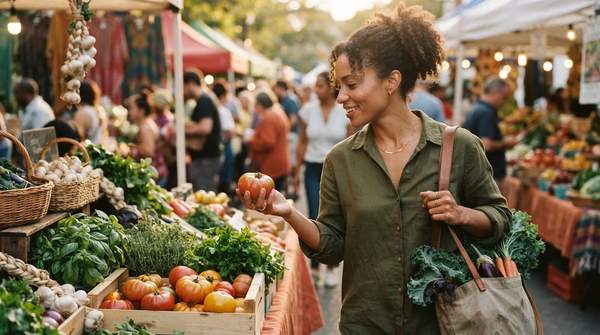
The farmers market is a vibrant landscape of peak-season produce, a sensory delight that can easily tempt even the most disciplined shopper. For anyone cooking for one, however, that beauty can be deceptive. It’s easy to get swept up in the abundance, only to find your refrigerator filled with gorgeous vegetables that spoil before you can possibly eat them. But the farmers market isn’t a trap for the solo cook; it’s an opportunity. With the right strategy, it becomes the perfect place to shop, allowing you to buy exactly what you need, minimize waste, and create delicious, single-serving meals all week long.
Why Farmers Markets are a Solo Cook's Secret Weapon
Unlike supermarkets, where produce often comes pre-packaged in family-sized quantities, farmers markets are uniquely suited for solo cooking. The key advantage, as writer Emma Jacobson highlights for Bon Appétit, is that the produce is typically sold loose. This simple fact means "you can buy one of anything that catches your eye." This freedom from bulk packaging is what she calls the "ultimate cheat code" for anyone cooking for themselves. There is no need to commit to a three-pound bag of carrots when all you want is a single, iridescent one for a special salad. This ability to purchase precise, small quantities empowers you to gather a variety of ingredients without the risk of overbuying, making the market an ideal partner in the fight against food waste.
The Smart Shopper's Framework: Balancing Shelf-Life
The most effective way to navigate the market's bounty is to arrive with a plan. According to The Chopping Block, a culinary school, having a plan helps prevent you from being overwhelmed and ensures you don't waste the beautiful produce you buy. A core part of this strategy involves assessing your potential purchases based on their longevity. Food writer Sylvia Fountaine, on her website Feasting At Home, notes that the "saddest thing is seeing what you’ve purchased go to waste because you couldn’t go through it all." To avoid this, she advises categorizing produce into two groups: delicate items that need to be eaten immediately and heartier ones that will last longer. This approach allows you to build a balanced basket, enjoying variety without the pressure of a ticking clock.
Farmers Market Solo Shopping Framework
To put this strategy into practice, a solo cook can use a simple decision framework at the market. By consciously separating produce into categories based on how quickly they need to be consumed, you can build a weekly haul that provides both immediate gratification and long-term flexibility. This ensures that delicate items are enjoyed at their peak, while sturdier vegetables form the backbone of meals later in the week.
| Produce Category | Characteristics & Examples | Solo Shopping Strategy |
|---|---|---|
| Eat-Immediately Produce | These items are delicate and have a short shelf-life. Examples from Feasting At Home include sprouts, lettuce, and berries. | Be conservative with these purchases. Buy only a small amount that you plan to eat within a day or two to enjoy them at their peak freshness. |
| Longer-Lasting Produce | These are robust items that can be stored for a longer period. Examples from the same source include potatoes, cabbage, apples, kale, leeks, and winter squashes. | You can be less conservative with these. They form a versatile base for multiple meals, giving you more time and flexibility to use them. |
Eat-Immediately Delights: Enjoying Peak Freshness
The "eat-immediately" category is where you’ll find some of the market’s most exciting treasures, but they require prompt attention. Items like tender lettuces, fresh sprouts, and ripe berries are highly perishable and lose their texture and flavor quickly. When shopping for one, the key is restraint. Sylvia Fountaine advises being "conservative" with these items, opting for just one or two selections per trip. Before you even place them in your bag, have a specific meal in mind for that day or the next. That handful of fresh berries can top your morning yogurt, and those delicate greens can become the base for a salad that very evening. This ensures you experience them at their absolute best, capturing the fleeting perfection that makes seasonal eating so rewarding.
Longer-Lasting Staples: Building Your Versatile Base
In contrast, longer-lasting produce forms the reliable foundation of your weekly menu. These are the workhorses of the solo kitchen—items like potatoes, cabbage, apples, kale, and winter squash that, according to Fountaine, give you more time to consume them. You can be "less conservative" with these purchases because their sturdiness provides flexibility. A head of cabbage can be used for slaw on Monday, roasted wedges on Wednesday, and added to a soup on Friday. A few apples can be eaten as snacks or baked into a single-serving dessert. These staples allow for spontaneity, ensuring that even if your plans change, you have a well-stocked pantry of fresh ingredients to draw from without the risk of spoilage.
Mastering Meal Planning for One: Versatility is Key
With your balanced haul, the next step is to think about how to use it all. For a solo cook, the goal is to maximize every ingredient. This doesn't require a rigid, recipe-by-recipe schedule. Instead, focus on versatile components that can be adapted for multiple dishes. For instance, Bon Appétit highlights an umami-rich dressing that serves as a dip for raw vegetables, a marinade for chicken or tofu, and a coating for a "big salad just for myself." This approach transforms a single preparation into the foundation for several distinct meals. Thinking this way allows a small number of core ingredients to stretch across an entire week, preventing both food waste and the monotony of eating the same meal repeatedly.
Your Next Farmers Market Trip: Shop Smart, Eat Well
To make your farmers market trips both enjoyable and efficient, approach them with a clear strategy. Solo cooks should embrace the freedom of buying loose, single items to control portions precisely. By consciously balancing your basket with a few delicate, "eat-immediately" items and a solid foundation of versatile, "longer-lasting" staples, you set yourself up for a week of varied and delicious meals. Pre-planning how you might use these ingredients in multiple ways is the final step to ensuring your beautiful market finds end up on your plate, not in the compost bin. The success of this approach will be evident in your kitchen.
The measurable indicator of your success will be reduced food waste in your kitchen and a varied menu from your farmers market purchases.
Sources
- The Farmers Market Is Built for Solo Cooking — Bon Appétit
- How to Master the Farmers Market — Thechoppingblock
- 50 Seasonal Farmers Market Recipes — Feasting At Home