A fermented hot sauce is one whose tang comes from lactic acid produced by Lactobacillus bacteria digesting the sugars in peppers, rather than from vinegar poured in at the end. That single difference in chemistry changes everything: how the sauce is made, how it tastes, and how its heat lands on your tongue. Vinegar-based sauces — the sharp, bright bottles most of us grew up with — get their acidity from acetic acid added directly to the blend. Fermented sauces earn their acidity slowly, through a living process that also unlocks aromas a raw pepper keeps locked away.
What Makes a Hot Sauce Fermented?
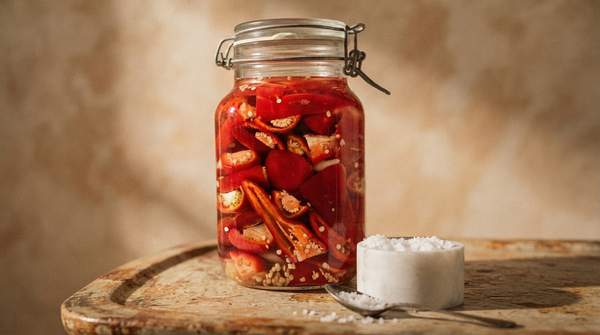
The label "fermented" on a hot sauce refers to one specific thing: the peppers (and often garlic and other aromatics) have spent time in a salt brine where naturally occurring Lactobacillus bacteria have converted their sugars into lactic acid. As the American Homebrewers Association explains in its guide to fermented hot sauce, the brine — a solution of water, salt, and sugar — both preserves the peppers and creates the conditions for those bacteria to begin fermentation.
So the defining question is not whether a sauce is spicy or smooth, but where its sourness comes from. If it was produced by microbes working over days or weeks, it's fermented. If it comes from vinegar steeped with peppers — as with Puerto Rican pique sauce, where hot peppers are steeped directly in vinegar — it's a vinegar-based sauce, however delicious it may be. The two categories can overlap in a bottle, but the core acid and the process behind it remain distinct.
The Science of Lacto-Fermentation in Hot Sauce
Here's what happens at the molecular level, as the fermenter behind Off the Deck Hot Sauce describes it: Lactobacillus fermentation breaks down the cell walls of the pepper flesh. Enzymes then release volatile aromatic compounds that are locked away in raw peppers. Sugars that would register as simple sweetness in a fresh pepper get metabolized into something more complex.
The heat itself transforms too. The capsaicin — the compound responsible for the burn — doesn't disappear, but it integrates differently into a fermented environment, often arriving more gradually and fading more slowly than it does in a raw pepper. That's why many fermented sauces feel rounder on the palate: the heat arrives as a slow swell rather than a slap.
Finally, the acidity produced by fermentation is lactic acid, not acetic acid — which is what vinegar is. That distinction matters to your palate. Lactic acid reads as tangy and rounded; acetic acid reads as sharp and immediate. The bacteria also do double duty as preservatives: the acidic environment they create keeps the peppers safe and stable, which is precisely why humans have trusted this process for millennia.