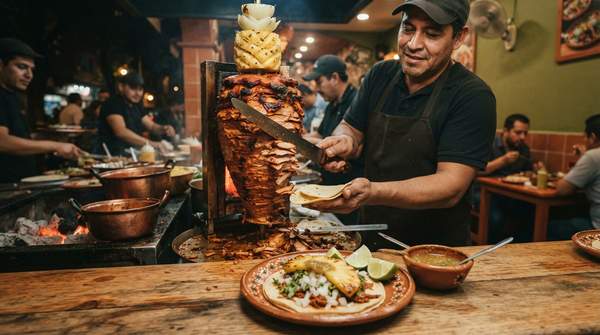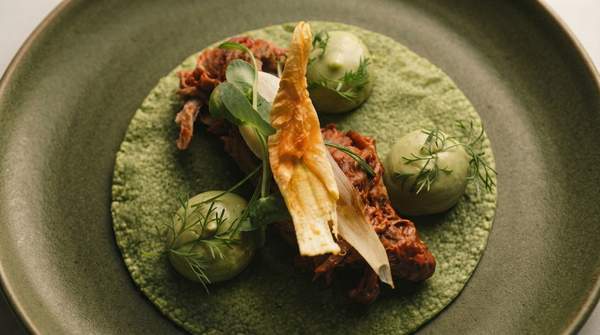
The street food you eat standing up is now the street food you eat with a reservation. The clearest evidence of this shift comes from Unilever Food Solutions, which named "Street Food Couture"—upgraded street food classics—one of its four key food trends for 2025, unveiled at its Future Menus event in Wageningen. The pattern is remarkably consistent across dishes: keep the shape, the name, and the soul of the original, then swap in luxury ingredients and refined technique. Tacos get Wagyu and lobster; pizza gets truffle and caviar; samosas get crab and truffle oil. Here is how each transformation works, and why it's happening now.
The Rise of Street Food Couture: From Cart to Culinary Canvas
Street food has always been where the real eating happens, but only recently has the fine dining establishment admitted it. The Michelin guide's recognition of street food stalls and hawker centers has, as Griffith Foods puts it, "legitimized what consumers already knew: some of the most precise, purposeful cooking in the world happens outside of restaurants." That legitimacy travels fast. Chef Mark Serice, Griffith Foods' Vice President of Global Culinary, argues that "social media influencers and their video tours of markets and restaurants can have far more impact than a Michelin guide rating across a broad range of consumers—and they most certainly influence Michelin critics to seek out what is already known by many."
So the pipeline is established: a dish earns its reputation on the street, goes viral on video, gets blessed by critics, and finally lands on a tasting menu. Debic, profiling street foods that have influenced gastronomy, traces exactly this arc for dish after dish—from street corner to Michelin-starred dining room.
Street Food Couture: A Comparative Evolution
Before the dish-by-dish breakdown, here is the formula at a glance. The table juxtaposes each dish's traditional core with its gourmet counterpart, and the pattern is unmistakable: the structure and recognizability stay; the fillings, toppings, and techniques get upgraded.
| Dish | Traditional Form & Ingredients | Gourmet Adaptation Examples | Key Transformation |
|---|---|---|---|
| Tacos | Mexico's most famous street food, filled with various meats, vegetables, and salsa | Gourmet tacos with lobster, foie gras, and Wagyu beef in top restaurants | Luxury fillings replace traditional ones; the taco format itself survives the trip to Michelin-starred kitchens |
| Pizza | A simple dish from Naples; Pizza Margherita is the most famous variation | Artisanal dough preparations with exclusive toppings such as truffle, caviar, and burrata | Refined dough technique plus luxury toppings elevate a humble classic |
| Samosas | Triangular fried pastries from India, filled with spiced potatoes, peas, and sometimes meat | Refined fillings such as crab meat or lamb with truffle oil in top restaurants worldwide | Ingredient substitution and fusion reinvention; a samosa stall in Malaysia even holds a Michelin star |
Read down the last column and the shared logic appears: in every case, the vessel and the identity are preserved while the contents are enriched. That is the whole trend in one table.
Tacos: A Mexican Staple Reimagined
The taco is arguably the trend's poster child, and its superpower is its simplicity. Debic notes that the taco's simplicity and versatility have had a worldwide influence: chefs in top restaurants now create "gourmet tacos" with luxurious ingredients like lobster, foie gras, and Wagyu beef. The taco, in their telling, "has evolved from the street corner to Michelin-starred restaurants."
What's clever here is what doesn't change. A taco filled with Wagyu is still, structurally, a taco—handheld, salsa-accompanied, unpretentious in form even when the filling costs more than my first car. The luxury lives inside the tortilla; the ritual of eating it stays gloriously intact. That tension between price and posture is precisely what makes the gourmet taco work on a menu.
Pizza: Italy's Iconic Slice Goes Gourmet
Pizza began, as Debic recounts, in Naples and spread across the world in countless forms, with the Margherita as its most famous expression. And although pizza is traditionally a simple dish, chefs have elevated it into a culinary inspiration through artisanal dough preparations and exclusive toppings such as truffle, caviar, and burrata.
Notice the two-front strategy: the upgrade happens both above and below the toppings. Artisanal dough work is technique-driven elevation—the kind of thing that justifies a wood-fired oven and a pizzaiolo's name on the menu—while truffle and caviar are ingredient-driven elevation. Pizza is unusual among street foods in that its transformation is as much about craft as about luxury shopping. The slice remains a slice; the philosophy behind it changes entirely.
Samosas: Indian Snack, Global Appeal
The samosa may be the most surprising entry. Traditionally a triangular fried pastry from India, filled with spiced potatoes, peas, and sometimes meat, it has become a source of inspiration for modern fusion chefs. Debic reports that in top restaurants around the world, samosas are made with refined ingredients such as crab meat or lamb with truffle oil.
And the street-to-stars pipeline runs both directions here: there is, remarkably, a samosa stall in Malaysia with a Michelin star. That detail matters because it collapses the usual hierarchy. The samosa doesn't need a white tablecloth to be world-class, and its gourmet versions—crab-filled, truffle-scented—compete for attention with the original rather than replacing it.
Driving Forces Behind the Elevation: Culture, Economy, and Accessibility
Why is this happening now? Unilever Food Solutions ties Street Food Couture directly to Gen Z's preference for casual dining, which it attributes in part to inflation. When the tasting-menu splurge feels out of reach, a luxury taco delivers the thrill of extravagance at a friendlier price point—accessible luxury in edible form.
Two other currents feed the trend. Unilever's trend report points to the increased visibility of global street food on social media, alongside growing demand for Korean and Mexican flavors and the influence of migration, globalization, and tourism on menus. And foodservice analysis from Dennis Food Service observes that for millennials and Gen Z, "no flavor pairing or experiential dish is too extreme or off limits," making younger diners the natural audience for a dish that is simultaneously familiar and surprising.
The Art of Adaptation: Preserving Authenticity in Gourmet Street Food
So what separates a successful elevation from an expensive gimmick? Debic's guidance to chefs is the closest thing the trend has to a rulebook: "To make it successful, it's important to maintain the pillars of the dish, the essence of why it became so popular." If a dish earned its fame through sharp contrasts between basic flavors, those contrasts should survive into the new version. "This way, you maintain the recognizability while still being able to surprise with the execution."
The same philosophy shows up in the broader trend reporting. Unilever's profile of chef Santiago Lastra—who reinterprets the flavors of his Mexican heritage at KOL in London using only British ingredients—describes a style "as much about honoring culture as it is about embracing innovation." The lesson is consistent: innovation is the seasoning, not the dish. A Wagyu taco that no longer tastes like a taco has failed at both ends of the spectrum.
Navigating the Gourmet Street Food Landscape
To successfully engage with the Street Food Couture trend, diners should seek out dishes that balance innovative, high-quality ingredients with a clear respect for the original dish's core flavors and cultural essence. The evidence points to a simple test you can run at the table: a successful gourmet adaptation will be recognizable as its traditional counterpart, despite elevated ingredients or techniques, and will be positively reviewed for both its innovation and authenticity. If the lobster taco in front of you still reads unmistakably as a taco—salsa, handheld joy, and all—the chef understood the assignment. If it's just lobster wearing a tortilla costume, send your compliments elsewhere.
Sources
- These are the 4 most important food trends for 2025 — Foodinspiration
- Trends in International Street Food — Griffith Foods
- 8 inspiring street food dishes that influenced gastronomy — DEBIC
- Foodservice & The Street Food Influence — Dennisfoodservice