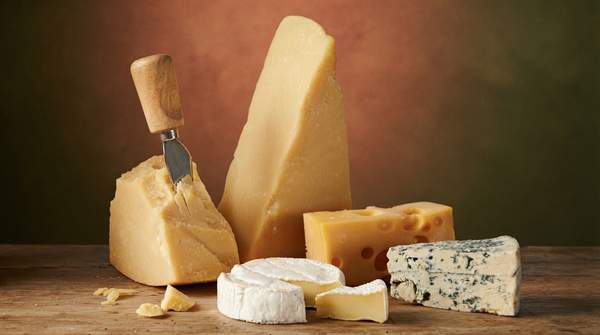
Every cheese you've ever loved began as the same three raw materials: lactose, protein, and fat. What separates a nutty Swiss from a piquant Pecorino isn't the milk alone—it's which of three biochemical pathways the cheesemaker chooses to emphasize. Scientists studying cheese flavor describe glycolysis (the breakdown of lactose), proteolysis (the breakdown of protein), and lipolysis (the breakdown of fat) as the engines of flavor formation, and understanding them lets you deconstruct any wedge into its scientific origins.
The Foundation of Flavor: Milk's Core Components
Milk arrives at the creamery carrying the entire flavor potential of the finished cheese, packed into three components. Lactose and citrate are the main carbohydrates in all mammalian milks, though lactose content varies widely from animal to animal. Proteins and fats make up the rest of the raw material that microbes and enzymes will spend weeks or years dismantling. As biosolutions producer Novonesis explains, starter and ripening cultures produce volatile compounds by metabolizing lactose, protein, and fat, while enzymes drive those same conversions, releasing lactic acid, peptides, amino acids, and fatty acids that become the characteristic flavors and aromas of cheese. The regional conditions, technology, and ripening environment all shape how this plays out—which is why the same pathways can taste wildly different depending on where and how they're steered.
Glycolysis: Lactose's Transformation into Tang and Acidity
The first pathway is the sprinter of the trio. Lactose is metabolized into L-lactate, DL-lactate, or a racemic mixture of both—a conversion that a scientific review of cheese flavor pathways calls essential to flavor production in all cheeses. This is the tangy backbone of nearly every variety. But the story doesn't end with lactic acid. In cheddar and Dutch-type cheeses, nonstarter bacteria isomerize the L-lactate produced by the Lactococcus lactis starter into DL-lactate, subtly shifting the acid profile. Some bacteria, including Leuconostoc species, produce other compounds such as ethanol alongside lactate.
The most theatrical example lives in the Alps. In Swiss cheese, Propionibacterium species metabolize lactate into propionates, acetates, carbon dioxide, and water—and that carbon dioxide is the cause of the characteristic "eyes" in the cheese. Acetate, meanwhile, is an important flavor compound in many cheeses, forming not only from lactose but also via lactate and citrate metabolism. So glycolysis gives you both the tang and, in the right hands, the holes.
Proteolysis: Unlocking Savory and Complex Notes from Proteins
Proteolysis is the slow, patient pathway—the one that turns rubbery curd into something with depth. Here, milk proteins are broken down into peptides and amino acids, primarily by peptidases. According to the Amano Enzyme research team, peptidases function as precision tools, breaking down protein fragments into ever-smaller peptides and individual amino acids. These fragments are where the savory magic lives: peptides and amino acids contribute the umami-rich, brothy notes that make aged cheeses taste profound rather than merely salty.
The pathway has a shadow side, too. The same breakdown can produce bitter notes when specific amino acids and their further breakdown products accumulate—the Amano team notes that these define complex flavor profiles, and complexity cuts both ways. Proteolysis also interacts with its sibling pathways in ways scientists are still untangling. A study of Swiss cheese flavor variability found that sulfur compounds formed from the catabolism of the amino acid methionine correlated with free fatty acids from lipolysis, suggesting the two pathways are linked during ripening—though the researchers cautioned that whether that relationship is causational or accidental remains to be explored.
Lipolysis: The Source of Piquant, Buttery, and Fruity Aromas
If proteolysis is the slow burn, lipolysis is the fireworks. Lipases break down milk fat triglycerides into free fatty acids, and the chain length of those acids dictates the flavor. The Amano Enzyme research team lays out the map: short-chain fatty acids create sharp, tangy flavors characteristic of aged cheeses; medium-chain fatty acids create distinctive goaty flavors in specialty cheeses; and long-chain fatty acids contribute buttery, creamy tastes that enhance mouthfeel. A review by P.L.H. McSweeney and M.J. Sousa adds that short-chain fatty acids, which have the greatest flavor impact, are generally found at a specific position on the triglyceride molecule, and that pH changes how the acids are perceived.
Lipolysis is particularly extensive in hard Italian varieties, surface bacterially-ripened smear cheeses, and blue mould cheeses, where it is essential to correct flavor development. In mould-ripened cheeses, Penicillium species produce potent extracellular lipases that do much of the work. The downstream products matter as well: a Swiss cheese flavor study notes that ester compounds have been correlated with sweet odors in Appenzeller, Gruyère, Swiss, Italian, and blue cheeses—though at high concentrations, ethyl hexanoate and other ethyl esters were strongly associated with fruity flavor defects in Cheddar. More is not always better.
The Flavor Blueprint: How Milk Transforms into Cheese Character
Here is the framework that connects every raw component to the flavor on your palate—use it to trace any cheese's character back to its biochemical source.
| Milk Component | Biochemical Process | Key Agents | Resulting Flavor Compounds and Profiles |
|---|---|---|---|
| Lactose | Glycolysis: lactose converts primarily into lactic acid | Starter cultures such as Lactococcus lactis; non-starter lactic acid bacteria; Propionibacterium species in Swiss cheese | Lactic acid (essential tang); further metabolism yields propionates, acetates, and carbon dioxide, which creates the "eyes" in Swiss cheese |
| Proteins | Proteolysis: proteins break down into peptides and amino acids | Peptidases from milk, starter cultures, rennet, and secondary microbiota | Savory, umami, and sometimes bitter notes; specific amino acids and their breakdown products define complex profiles |
| Fats | Lipolysis: triglycerides break down into free fatty acids | Lipases from milk, rennet, and microbial cultures; potent extracellular lipases from Penicillium species in mould-ripened cheeses | Short-chain fatty acids give sharp, tangy aged-cheese notes; medium-chain acids give goaty flavors; long-chain acids give buttery, creamy mouthfeel |
The pattern to notice: fat breakdown leads to sharp and piquant notes, protein breakdown to savory or bitter ones, and lactose breakdown to acidity plus the distinctive signatures like Swiss eyes. Every cheese's personality is a different blend of these three layers.
Cheesemakers' Toolkit: Steering Flavor with Microbes and Enzymes
None of this is left to chance. Cheesemakers deliberately select cultures and enzymes to steer each pathway toward a target profile, and the choice of agent is as consequential as the pathway itself. The Amano Enzyme research team describes how different lipase sources yield distinct outcomes: animal-derived lipases produce intense, piquant flavors typical of traditional Italian cheeses; microbial lipases create milder, more controlled development suited to mass production; and pregastric lipases generate the distinctive sharp notes of traditional Romano and Pecorino. Novonesis similarly notes that its culture strains are chosen for specific flavor profiles, from mild and creamy to complex and intense.
Yeasts are the quieter members of the toolkit. A scientific review on yeasts in cheese reports that species such as Kluyveromyces, Debaryomyces, and Saccharomyces contribute to flavor and texture development in mold and bacterial surface-matured cheeses, because their lipolytic and proteolytic activities can shorten ripening time. In French Reblochon, researchers have found Candida species and dairy yeasts at work. The craft, in other words, is choosing which microbes and enzymes get to run which pathway—and for how long.
Mastering Flavor: The Cheesemaker's Deliberate Craft
Cheesemakers can deliberately control the final flavor profile of cheese by selecting specific microbial cultures and enzymes to steer the biochemical breakdown of lactose, proteins, and fats. That control is not an abstraction: the consistent presence of desired flavor compounds—specific fatty acids, esters, acetates—in cheese batches, as measured through chemical analysis or sensory evaluation, indicates successful flavor control. The next time a wedge tastes sharply of aged tang or softly of butter, you can name the pathway, the agent, and the choice behind it.
Sources
- Craft next-level signature cheese flavors — Novonesis
- A Review on the General Cheese Processing Technology, Flavor Biochemical Pathways and… — PMC
- Enhancing Flavor and Functionality – The Science Behind Enzyme Modified Cheese-Amano Enzyme Inc.
- Swiss Cheese Flavor Variability Based on Correlations of Volatile Flavor Compounds, Descriptive… — PMC