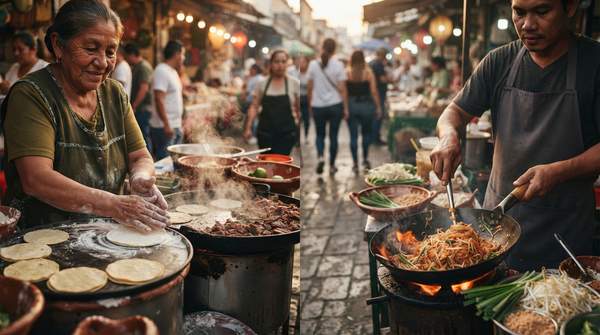
Despite its status as a beloved street food, Authentic laphing demands 4-5 hours of preparation. This extensive duration, far exceeding typical fast-food, reveals the hidden dedication behind the popular Himalayan snack. While its unique flavors and versatility are appealing, such a significant time commitment suggests laphing's global trend will likely lean towards artisanal appreciation, not mass-produced convenience.
The Hidden Labor of Laphing
Authentic laphing demands 4-5 hours of preparation, according to Yowangdu. This isn't just active cooking; it's patient stages of cooling, setting, and assembly. Such a commitment challenges the very definition of 'street food,' revealing its perceived simplicity is a testament to hidden labor and skill, not easy production. The true craft lies in this extended, unglamorous process, a quiet rebellion against instant gratification.
What is Laphing?
Laphing, a traditional Himalayan street food, is a cold, spicy noodle dish. It's typically garnished with chili oil, soy sauce, and vinegar, creating a complex, tangy, and spicy experience, according to Wikipedia. This versatile dish can be enjoyed plain, topped with crunchy ingredients, or even as a puri-like roll with potato and Wai Wai noodles, as reported by Washburnreview. It's less a fixed dish, more a culinary canvas awaiting your adventurous palate.
Crafting Laphing's Jelly
The jelly for laphing, made from 1 cup mung bean starch and 3 cups water, cooks in just 5-7 minutes over medium heat, according to Washburnreview. This brief active cooking time stands in stark contrast to the 4-5 hours of total preparation reported by Yowangdu. It suggests the true craft lies not in the heat, but in the patient cooling, setting, and assembly that follows, shaping laphing's unique texture and form. This crucial, yet often overlooked, waiting period defines the dish's elusive magic.
Practicality and Preservation
Plain laphing jelly sheets can be stored in an airtight jar for up to two days, notes Washburnreview. This allows home cooks and vendors to batch prepare the base, making subsequent servings much quicker to assemble. It's a clever workaround for the lengthy initial process, a testament to culinary ingenuity adapting tradition to modern pace without losing its soul.
Your Laphing Questions Answered
What are the core ingredients in laphing?
Beyond mung bean starch and water for the jelly, authentic laphing thrives on its chili oil blend: Sichuan peppercorns, garlic, and ginger. These aromatics, with soy sauce and vinegar, forge the dish's signature spicy, tangy dressing—a true flavor adventure.
Where can I find authentic laphing?
Seek out authentic laphing in Tibetan and Nepalese communities, especially in places like Dharamshala, India, and Kathmandu, Nepal. Street vendors and specialized restaurants in these regions offer the freshest, truest taste of this traditional snack, a culinary pilgrimage worth taking.
Given its demanding preparation and artisanal appeal, laphing appears poised to captivate a niche of adventurous eaters and home cooks, rather than becoming a fast-food staple.