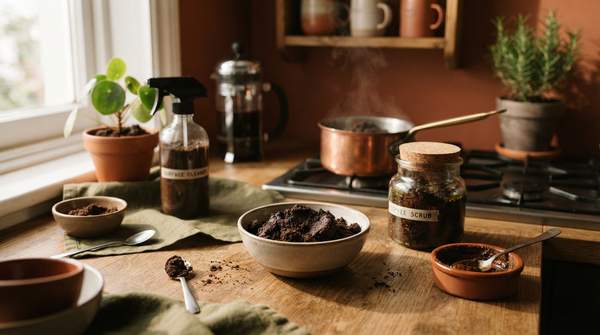
Yes, your spent coffee grounds deserve a second life. The used grounds from your morning brew can deodorize your fridge, scrub your dishes and hands, exfoliate your skin, flavor a crumb cake, and even become a whole second round of coffee. This guide sorts the genuinely practical options into a decision framework, so you can match the method to your need—and to the state of your grounds, wet or dried—instead of scrolling another disconnected listicle.
Introduction: The Value of Repurposing Coffee Grounds
If you brew daily, those grounds add up fast. One home cook writing for Studio Kitchen puts it plainly: as the only coffee drinker in her house, she accumulates two cups' worth of spent grounds every day using her small Bialetti stovetop maker. Her solution is to treat them as an ingredient rather than trash, folding them into cold brew, sponges, caramels, infusions, and even fermentation projects, because the grounds "still pack a punch flavour-wise."
The appeal is straightforward. Repurposing keeps organic waste out of your bin, saves money on things you'd otherwise buy—cold brew is notoriously expensive at the shops, scrubs and deodorizers cost real money—and gives you a small creative outlet before your first caffeine hit even wears off. It also rewards a tiny bit of planning: the difference between a jar of useful dried grounds and a container of mold is one drying step, which we'll cover in full below.
One honest note on scope before we dive in. This guide sticks to what the sources actually describe: household deodorizing and scrubbing, skin and hair care, and culinary flavor uses. You'll find plenty of claims online about coffee grounds as garden fertilizer or pest repellent, but the evidence gathered here doesn't support those applications with specific methods or context, so they're deliberately left out rather than repeated uncritically.
Essential Preparation: Drying and Storing Your Grounds
Here's the step most lists skip: wet grounds go moldy. The Studio Kitchen writer's routine is a good model, and it splits neatly into two tracks depending on your timeline. Track one: if you have a plan for the grounds soon, scoop them out of your brewer and store them in a sealed container in the fridge. Track two: if you don't have an immediate plan, dehydrate them first, then store the dried powder in a jar in the fridge—otherwise, she warns, "they may get mouldy after time."
Why does this matter so much? Moisture is the enemy. Damp grounds sitting at room temperature are exactly the environment mold loves, and once mold takes hold, the batch is done. Drying removes that risk and also changes how the grounds behave in recipes: dried grounds mix evenly into a batter or crumb topping, while wet grounds can throw off texture and add unwanted moisture to baked goods.
Practically, you have a few drying routes. Spread the grounds thinly on a tray and let them air-dry, stirring occasionally so they dry evenly throughout. If you're impatient or the weather is humid, a low oven or a dehydrator speeds things up considerably—the Studio Kitchen writer simply dehydrates hers. Once the grounds are fully dry and powdery, transfer them to a sealed jar and keep it in the fridge until you need them. Label it if you like; future-you will appreciate not guessing what that brown powder is.
Around the House: Cleaning and Deodorizing
Coffee's famous aroma works both ways—it smells great, and it absorbs the smells you don't want. Mr. Coffee's guide suggests keeping an open container of grounds in your pantry, refrigerator, or even your car as an odor absorber. You can also tie grounds into a bit of fabric and place the bundle wherever odors linger—a homemade sachet that costs nothing and takes two minutes.
For the sink, the same guide recommends putting used grounds down the drain and following them with a kettle of boiling water to help clear unpleasant sink odors. It's a two-step trick you can do with grounds you'd otherwise throw away, and the boiling water does the flushing work.
And in the kitchen, grounds double as a DIY hand scrub. Rub them over your hands to remove dead skin or potent food smells—the garlic and onion that soap alone struggles with. It's the rare cleaning product that leaves your hands smelling like a café instead of chemicals. Note that the odor-absorber container works best with dried grounds, since wet grounds in an open dish are back to the mold problem; the drain and hand-scrub uses, though, are perfect for grounds straight from the brewer.
Personal Care: Exfoliation and a Scalp Treatment
Those same gritty textures that make grounds a good scrubber make them a popular DIY skin exfoliant. Mr. Coffee lists a coffee scrub as a straightforward way to slough off dead skin, and it's a common at-home beauty application. One honest caveat: this is general DIY guidance, not dermatological advice—if your skin is sensitive or reactive, treat this one cautiously and rinse thoroughly.
For hair, Healthline describes a scalp treatment with a bit more structure. Before you shampoo, grab a handful of coffee grounds and massage them into your scalp and hair for a few minutes, then wash and rinse as you normally would. The site suggests doing this one to two times per week, or as needed. It's a pre-shampoo ritual, not a replacement for shampoo.
Healthline also notes that some research suggests caffeine may help stimulate and accelerate hair growth, and may benefit hair-loss conditions like alopecia areata and telogen effluvium. That's an early-research hedge, not a guarantee—but as a zero-cost addition to your shower routine, the bar for trying it is low. If you notice irritation, stop; your scalp didn't sign up for espresso.
Culinary Creations: Flavor, Not Nutrition
This is where repurposing gets genuinely fun. Tom Hunt, writing the Guardian's zero-waste "Waste Not" recipe column, makes the case that spent grounds "still have plenty of flavour and caffeine left in them." His go-to move is cold brew: steep the spent grounds in water for a long, slow infusion. The result is less acidic and less bitter than hot-brewed coffee, though still quite caffeinated because of the long steep time.
Hunt's economics are worth noting. Cold brew is expensive to buy because of the time it takes to make and the cost of the packaging, but it's surprisingly easy and effortless at home. He sometimes asks his local café for a bag of spent grounds to make a big three-litre batch for the week ahead—a move that scales your repurposing beyond your own kettle.
For baking, food writer Devan Grimsrud developed a cardamom and spent coffee crumb cake—a "plush, buttery cake flecked with spent coffee grounds." The grounds act as a flavoring, dotting the crumb with coffee character. This is the use where drying matters most: dried grounds distribute evenly through the batter and won't upset the texture, and they won't bring mold anywhere near your bake.
Healthline offers a savory angle too: rebrew used grounds to make coffee, let it cool, and use it to marinate meat in the refrigerator for up to 24 hours before cooking. The Studio Kitchen writer's list—cold brew, caramels, infusions, fermentation—hints at how far this rabbit hole goes. One boundary worth stating: these culinary uses are about flavor enhancement, not nutrition. Spent grounds aren't a health supplement; they're a seasoning.
Decision Framework: Choosing the Best Use for Your Coffee Grounds
Here's the cheat sheet. Match your immediate need to a method, then check the preparation column—drying is the one step that separates a successful repurpose from a moldy jar. Every entry below comes from the sources described above, and the framework deliberately excludes garden and pest-repellent claims, since the evidence here doesn't back them with specific methods.
| Domain | Use | Primary Benefit | Preparation | How to Apply |
|---|---|---|---|---|
| Around the House | Odor absorber | Neutralizes smells in pantry, fridge, or car | Dry the grounds first | Place in an open container, or tie in fabric and set nearby |
| Around the House | Sink deodorizer | Clears unpleasant drain odors | None—use wet | Put grounds down the drain, follow with a kettle of boiling water |
| Around the House | Hand scrub | Removes dead skin and strong food smells from hands | None—use wet | Rub grounds over hands, then rinse |
| Personal Care | Skin exfoliant | Sloughs off dead skin | None—use wet | Massage over skin as a DIY scrub, then rinse |
| Personal Care | Scalp treatment | Caffeine may help stimulate hair growth, per early research | None—use wet | Massage into scalp and hair a few minutes before shampooing, 1–2 times weekly |
| Culinary | Cold brew | Second batch of coffee; less acidic and bitter than hot brew | None—use wet or saved in fridge | Steep grounds in water for a long infusion; still caffeinated |
| Culinary | Baking (e.g., crumb cake) | Coffee flavor flecked through baked goods | Dry the grounds for texture and to prevent mold | Work dried grounds into the batter or crumb |
| Culinary | Meat marinade | Coffee flavor in cooked meat | Rebrew grounds; cool the coffee | Marinate meat in the fridge up to 24 hours before cooking |
How to read it: if your grounds are wet and you want zero effort, go for the sink deodorizer, hand scrub, scalp massage, or cold brew—no drying required. If you're willing to dry them, the odor absorber and baking routes open up. And if you've got more grounds than plans, dehydrate and jar them before mold gets a vote. The framework's real value is that it tells you the preparation cost up front, so you never start a project you don't have the grounds for.
Make a Sustainable Choice: Repurpose Your Coffee Grounds
The decision here is simple: actively repurpose spent coffee grounds for home, personal care, or culinary uses rather than discarding them, aligning with eco-conscious practice. Start with one method that fits your routine—cold brew if you drink coffee daily and want the biggest payoff, the fridge deodorizer if you want a set-and-forget win, the scalp massage if your shower needs an upgrade, the crumb cake if your weekend deserves it.
The measurable indicator of success is reduced coffee ground waste in your household trash and the successful application of at least one repurposing method. Pick your first project from the table above, dry a batch if the method calls for it, and check your bin by the end of the week—the difference should be visible, and it'll smell better too.
Sources
- Repurpose your used coffee grounds to make lots other recipes. — Studio Kitchen
- 10 Eco-Friendly Uses for Coffee Grounds — Calphalon
- 16 Creative Uses for Used Coffee Grounds — Healthline
- How to turn spent coffee grounds into cold brew – recipe — the Guardian
- cardamom and spent coffee crumb cake — Devangrimsrud