The smart kitchen appliance market is projected to hit $64 billion by 2030, according to The Business Research Company. Yet, some of the most impactful innovations for home cooks are surprisingly simple, like a single Wusthof knife that scoops, spreads, and slices bread. The projected growth of the smart kitchen appliance market to $64 billion by 2030 signals a strong desire for kitchen innovation, but true utility often trumps digital bells and whistles. Consumers increasingly value genuine multi-functionality and ease of use, pushing manufacturers to innovate beyond mere connectivity.
Smart Solutions and Clever Designs
Multi-cookers held the largest product share at 28.5% in 2025 within the global all-in-one kitchen appliances market, according to Dataintelo. Multi-cookers holding the largest product share at 28.5% in 2025 suggests consumers prioritize consolidated utility over single-function devices.
1. Multi-cookers
Best for: Efficient meal prep for busy households
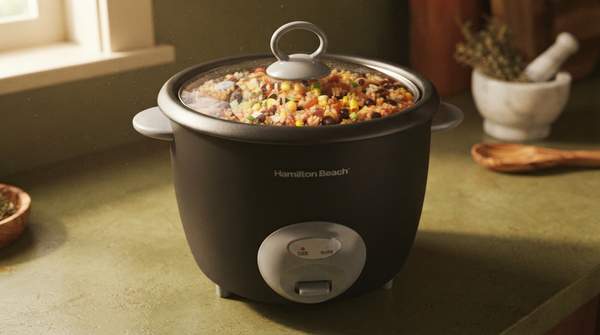
These appliances combine pressure cooking, slow cooking, steaming, and sautéing into one compact device, significantly reducing kitchen clutter.
Strengths: Consolidates multiple appliances; saves counter space; often includes preset programs for ease of use. | Limitations: Can have a learning curve; large size for some kitchens; not ideal for all cooking tasks. | Price: Moderate to High
2. Smart Kitchen Appliances
Best for: Tech-savvy cooks seeking enhanced monitoring and control
The smart kitchen appliances market reached $34.34 billion in 2026, with projections to hit $64 billion by 2030 at a 16.8% CAGR, according to The Business Research Company. Devices like the Meater wireless meat thermometer track ambient and internal food temperatures, connecting to an app that displays key data, notes Good Housekeeping. While expensive, smart devices offer unmatched precision and convenience for specific tasks, justifying their premium for dedicated cooks.
Strengths: Remote monitoring and control; precise temperature management; integration with other smart home systems. | Limitations: Higher cost; reliance on internet connectivity; potential privacy concerns. | Price: High
3. All-in-One Kitchen Appliances
Best for: Maximizing utility and reducing clutter in smaller kitchens
The global all-in-one kitchen appliances market was valued at $12.35 billion in 2025 and is projected to reach $23.31 billion by 2034 with a CAGR of 7.2%, driven by demand for versatile cooking solutions that reduce kitchen clutter and improve meal preparation, states Dataintelo. Simple tools like the Wusthof knife, with its short, wide blade and serrated side, offer multiple functions for scooping, spreading, and cutting bread and tomatoes, according to Good Housekeeping. The global all-in-one kitchen appliances market's steady growth, projected to reach $23.31 billion by 2034 with a CAGR of 7.2%, confirms that practical multi-functionality, even in simple tools, remains a core driver for home cooks seeking efficiency.
Strengths: Combines numerous functions in a single unit; saves significant counter and storage space; improves efficiency in meal preparation. | Limitations: Can be expensive; some functions may not perform as well as dedicated tools; complex interfaces in advanced models. | Price: Moderate to High
4. Portable blender
Best for: On-the-go nutrition and small-batch blending
A portable blender is cordless, small, and efficient, with a detachable drinking vessel, according to Good Housekeeping. The rise of portable blenders signals a growing demand for convenience and health-conscious options that fit active lifestyles.
Strengths: Cordless operation; compact and easy to transport; doubles as a drinking vessel. | Limitations: Limited capacity; less powerful than full-sized blenders; battery life considerations. | Price: Low to Moderate
Market Dynamics: Smart vs. General Growth
| Market Segment | 2025 Market Size | 2026 Market Size | 2030/2034 Projection | CAGR (2026-2030/2034) |
|---|---|---|---|---|
| Smart Kitchen Appliances | $29.32 billion | $34.34 billion | $64 billion (by 2030) | 16.8% (2026-2030) |
| All-in-One Kitchen Appliances | $12.35 billion | N/A | $23.31 billion (by 2034) | 7.2% (2026-2034) |
While the smart appliance sector shows aggressive growth, projected to reach $64 billion by 2030 by The Business Research Company, the overall all-in-one kitchen appliances market also demonstrates sustained expansion, expected to reach $23.31 billion by 2034, according to Dataintelo. The significant divergence in market growth projections, with smart appliances projected to reach $64 billion by 2030 and all-in-one appliances $23.31 billion by 2034, indicates that the smart kitchen market's true potential is far from certain, urging caution for brands banking on explosive expansion.
How Consumers Are Shopping for Kitchen Innovations
E-commerce sales saw a 6.7% increase in Q2 2024 compared to Q2 2023, according to The Business Research Company. Online channels are increasingly vital, making innovative kitchen tools more accessible and empowering home cooks to find solutions that fit their specific needs.
If manufacturers continue to prioritize practical utility and genuine multi-functionality over just connectivity, the kitchen appliance market is likely to see sustained growth driven by appliances that truly simplify home cooking.