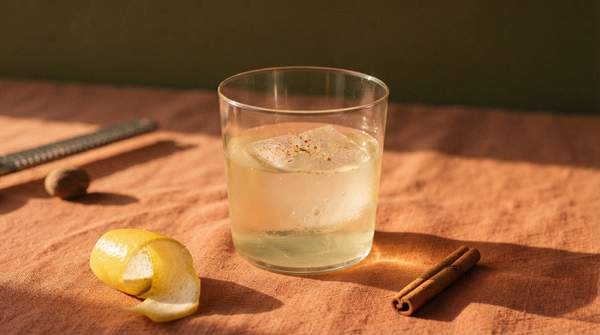
Here's the short answer before we get our hands dirty: if your cocktail is tannic, bitter, or woody—think over-steeped tea, red wine, or a heavily oaked whiskey—milk washing is your method, because its curds chemically capture astringent compounds. If you're clarifying a delicate or stable juice like orange or grapefruit, or a higher-proof drink, agar-agar's gentle gel filtration is the better tool. Gelatin works on the same gel-trapping principle as agar, with the caveat that it's an animal protein rather than a seaweed-derived one. The right choice comes down to what's making your drink cloudy and what you want the finished sip to taste like.
Introduction to Cocktail Clarification
I'll admit it: the first time I watched a murky, sediment-heavy punch emerge from a filter as something that looked like water but tasted like a cocktail, I felt like I'd witnessed a small magic trick. It isn't magic, of course—it's chemistry and physics wearing a nice suit. Clarification transforms cloudy drinks into what John Kinney, writing for Sidewinder Spirits Co., calls "crystal-clear elixirs that are as polished in texture as they are in appearance," a practice with roots stretching back to 17th-century milk punches and even earlier recipes.
Why bother at home? Beyond the obvious visual drama, clarified drinks refine flavor, extend shelf life, and change how a liquid feels in the mouth. The cloudiness in most cocktails comes from tiny suspended particles—mostly plant material like pectin and cellulose, as Paul Adams explains at SevenFifty Daily—and each removal method interacts with those particles differently. Some methods merely filter; others actively strip flavor compounds along the way. Understanding which is which is the whole game.
A quick boundary note: professional bars sometimes reach for a centrifuge, which spins solids out mechanically. That's laboratory equipment, and we're leaving it at the mention. Everything below—milk, agar, gelatin—can be done in an ordinary kitchen, as Maja Jaworska notes in PUNCH: "there are plenty of ways you can tackle clarification at home, no laboratory required."
The Science of Milk Washing
Milk washing is the oldest trick in the clarified-cocktail book—Camper English, writing at Alcohol Professor, points out that the oldest known recipe, Mary Rockett's Milk Punch, dates to 1711. The mechanism is protein coagulation, and it's genuinely elegant. The acidity in your cocktail curdles the milk, and as English puts it, "it's all about the quality of the curds." Those curds don't just look unappetizing; they're doing the actual work.
Here's the part that makes milk washing special among the three methods: it's the only one that chemically removes specific flavor compounds rather than just physical particles. Tannins and polyphenols—the culprits behind the astringent, gripping sensation in your mouth—bind with the proteins in the milk instead of with proteins in your saliva, and get carried out of the cocktail entirely. Tannins can come from over-steeped tea, too-woody whiskey, and the grape skins in red wine, so milk washing softens woody, tannic, and bitter flavors into something noticeably smoother.
This is why so many classic milk punch recipes call for tea, as English observes: you can deliberately over-steep the tea for maximum flavor extraction, knowing the bitter tannins will be stripped out at the end. It's the same softening logic behind egg white in a Whiskey Sour. The trade-off is real, though—you're not just clarifying, you're editing the flavor. An Instructables guide by AngusLiv describes the process as one that removes "bitter and astringent tastes" from naturally occurring molecules like polyphenols while adding "another depth of flavor" to the drink. The result is a silky, polished mouthfeel, but it's a different drink than the one you started with.
Agar-Agar Clarification: Gel Filtration Explained
Agar-agar takes a completely different scientific route. Instead of chemistry, it's pure mechanics: agar consists of long chains of molecules that, as Jaworska explains, can be "detangled" in hot water. When the gel forms, it grabs onto the impurities—the suspended pectin and cellulose that make juices cloudy—and holds them in its structure while the clear liquid runs through. Dave Arnold, whose 2014 handbook Liquid Intelligence is the reference point for nearly every writer on this subject, favors agar over other gel methods; Adams notes that chefs have long used eggs or gelatin to clarify stocks, and those work in booze too.
The key distinction from milk washing: agar doesn't chemically bind flavor compounds the way milk proteins bind tannins. It's a physical filtration, which makes it gentler on the base liquid's composition. That gentleness is why agar suits delicate juices and higher-ABV cocktails, where you want clarity without rewriting the flavor. There's still a flavor consequence—removing plant material like pectin and cellulose can modify the original profile, as Adams notes—but it's subtraction of texture-carrying solids rather than targeted removal of bitterness.
Practically, the process is straightforward: heat your liquid, dissolve the agar, let the gel set, then break it up and strain. The gel does the trapping; your filter paper just catches the pieces. No curds, no dairy flavor, and—unlike gelatin—no animal products, which matters if you're serving vegan guests.
Gelatin Clarification: A Protein-Based Approach
Gelatin clarification is agar's close cousin. Both work by the same mechanism, as Jaworska describes: the solids that make your cocktail cloudy get trapped in a gel while the clarified liquid passes through. Both substances are long molecular chains that detangle in hot water, set into a gel as they cool, and carry the captured particles away when you strain.
The differences are practical rather than conceptual. Gelatin is an animal-derived protein, so it's off the table for vegan drinks where agar—a seaweed extract—shines. Gelatin also has a long culinary pedigree in clarification; as Adams points out, chefs have used it to clarify stocks for ages, and the technique transfers directly to cocktails. English confirms both gelatin and agar-agar are described in Arnold's Liquid Intelligence as alternatives to milk or egg, with "the solid bits caught in the gel and the liquid runs through."
What the evidence doesn't establish is a sharp sensory distinction between finished gelatin- and agar-clarified drinks—both are gel-filtration methods, and both leave the flavor largely intact apart from the removal of suspended solids. If you're choosing between them, the deciding factors are dietary constraints and what's already in your pantry, not a measurable difference in the glass.
Clarification Method Comparison for Home Mixologists
Here's the at-a-glance decision table—map your ingredients and your desired outcome against each row, and the method should announce itself. The reasoning path is simple: each method's mechanism determines what it removes, and what it removes determines the flavor and texture you'll end up with.
| Method | Scientific Mechanism | Best For | Impact on Flavor | Impact on Texture | Key Process Steps |
|---|---|---|---|---|---|
| Milk Washing | Acidity curdles milk proteins; curds bind tannins and polyphenols | Tannic, bitter, or woody drinks (tea, red wine, oaky whiskey infusions) | Softens astringent, bitter flavors; adds depth | Silky, polished mouthfeel | Add milk to acidic cocktail; let curds form; strain through the curd bed |
| Agar-Agar | Gel traps suspended solids (pectin, cellulose); liquid filters through | Stable citrus juices like orange and grapefruit; delicate juices; higher-ABV cocktails; vegan drinks | Alters flavor by removing plant material; gentler than milk washing | Clear, clean liquid without dairy softness | Heat liquid; dissolve agar; set gel; break and strain |
| Gelatin | Same gel-trapping filtration as agar, using animal protein | Same use cases as agar, where animal products are acceptable | Comparable to agar—removes suspended solids | Clear liquid; no distinct texture change documented versus agar | Heat liquid; dissolve gelatin; set; break and strain |
Choosing Your Clarification Method: A Practical Guide
Now the rubber-meets-road part: your ingredients. Clair McLafferty, writing for the Tales of the Cocktail Foundation, relays guidance from industry voices that each method has its natural pairing—filtration works great for milk, more stable citrus juices like orange and grapefruit do well in gels, and quickly degrading, temperature-sensitive ingredients like lime juice are trickier, best handled by quick-gel clarification as outlined in Liquid Intelligence or, in professional settings, by centrifuge.
So a concrete decision sequence for your next build: Start with what's clouding the drink. If it's tannin-driven astringency—tea, red wine, woody spirits—milk washing is the only method that removes the actual bitter compounds, and it will change the drink's character in the process. If it's pulp and plant solids in a stable juice, agar or gelatin will give you clarity while leaving the flavor architecture standing. If your guests include vegans, agar wins by default over both milk and gelatin.
And if you're clarifying lime juice for something like a gimlet—McLafferty quotes a bartender's account of a striking clarified-lime gimlet at a San Francisco bar—know that lime is the fragile case, and the quick-gel approach is the documented workaround.
Selecting Your Clarification Technique
The decision, plainly: choose a clarification method—milk washing, agar-agar, or gelatin—based on the specific ingredients of your cocktail and the desired changes to its flavor and texture. Milk washing when you want bitterness edited out and a silky texture in; agar or gelatin when you want clarity with the flavor left alone, agar when the drink must stay vegan.
Your measurable indicator is right there in the glass: the clarity, smoothness, and altered flavor profile of the final cocktail. Run one drink through your chosen method, hold the clarified result next to the original, and judge all three—transparency, mouthfeel, and taste. If the mechanism did what the science says it should, you'll know within one batch whether you picked the right tool.
Sources
- The Art of Cocktail Clarification in Modern Mixology - Sidewinder Spirits Co
- The Science of Clarified Cocktails — SevenFifty Daily
- How to Science Your Way to a Clarified Cocktail — PUNCH
- How Does Milk Clarify Cocktails? — Alcohol Professor
- Clarified Cocktails — Instructables
- The History and Science of Clarification - Tales of the Cocktail Foundation