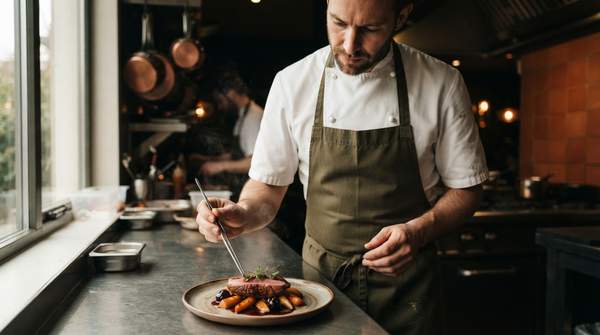
Noma's Los Angeles pop-up, priced at $1,500 per person including gratuity and beverage pairing, sold out its entire 16-week residency in just 60 seconds, according to Fine Dining Lovers. Astonishing demand for ultra-luxury dining shatters any lingering illusions about consumer price sensitivity in the current economic climate.
Yet, this singular triumph belies a stark reality: ingredient costs are soaring, while average diners balk at absorbing the inevitable menu price hikes. This widening chasm forces restaurants into an untenable position.
The industry faces a stark bifurcation. Accessible casual dining will continue to shrink. High-end experiential dining will flourish. The middle, however, will struggle to find its footing.
The Noma phenomenon, contrasted with average diners actively seeking cheaper options, according to CNBC, reveals a fractured market. Only the extremes reliably capture consumer dollars. This economic divide renders the middle-market restaurant segment increasingly vulnerable. Ingredient prices are 29% higher than pre-pandemic levels, according to restaurantdive. Menu price increases lag at 3.5% annually, according to the National Restaurant Association. This disparity creates an unsustainable squeeze for casual dining. Establishments must compromise quality or fundamentally reinvent their business model, a sentiment echoed by Chef Crenn.
The Unavoidable Price Hike: Why Your Favorite Dishes Cost More
Ingredient prices stand 29% higher than pre-pandemic levels, according to restaurantdive. A 29% surge in ingredient prices poses an existential threat to operational budgets. Restaurant menu prices have climbed 3.5% over the past 12 months, as reported by the National Restaurant Association. Even Chipotle Mexican Grill, a fast-casual titan, announced a 2% nationwide price increase, according to fox13news. Chipotle's 2% nationwide price increase demonstrates that no segment is immune to the relentless pressure of rising ingredient costs. The implication is clear: restaurants, from Michelin-starred to quick-service, are uniformly struggling with elevated operational costs, which are inevitably passed to consumers, albeit often with a delay that further erodes margins.
Diners Push Back: The Limits of Consumer Tolerance
Diners now actively choose smaller or cheaper menu items due to inflation, according to CNBC. Diners choosing smaller or cheaper menu items signals a clear shift in spending patterns. It also confirms a growing resistance to unchecked menu inflation, even as restaurants grapple with their own escalating expenses. Annual menu price increases stand at 3.5%. Yet, the National Restaurant Association reported that restaurant menu prices grew only 0.3% in May. The 0.3% monthly growth rate suggests establishments are already responding to acute consumer sensitivity. The implication is that restaurants cannot simply pass on costs indefinitely; they must innovate their value proposition or risk alienating a significant portion of their clientele.
The Bifurcation of Dining: Luxury Thrives, Simplicity Emerges
Noma's Los Angeles pop-up, at $1,500 per person, including gratuity and beverage pairing, sold out its entire 16-week residency in just 60 seconds, according to Fine Dining Lovers. Exceptional demand for ultra-luxury dining sharply contrasts broader market trends. Even perceived casual luxury now carries a steep price: side dishes routinely exceed $20, and roast chicken plates top $50, as Fine Dining Lovers also notes. Chef Dominique Crenn, recognizing these pressures, advocates for reducing menu size, ingredients, and complexity to manage costs and focus on essential elements, according to Fine Dining Lovers. The implication is profound: the market has cleaved. Consumers either pay a premium for unparalleled experiences, or they demand ruthless efficiency and focused value in a simpler culinary offering. The middle ground is evaporating.
The Future Plate: Less Accessible, More Deliberate
Chipotle restaurants surveyed recorded a 2% increase in menu prices, according to today. Chipotle's 2% menu price increase confirms that even fast-casual dining is not immune to pervasive cost pressures. This sustained upward trend across all restaurant segments fundamentally alters consumer value perception. The gap between grocery and restaurant price inflation has narrowed notably year to date, as observed by the National Restaurant Association. This erosion of the traditional value proposition for mid-tier dining demands a response. Establishments must offer truly unique experiences or risk an exodus of cost-conscious patrons back to home cooking. Dining out, for many, will become a more deliberate, less spontaneous act, reserved for special occasions or specific, high-value propositions. By the end of 2026, casual dining establishments, if they fail to reinvent, will likely find their business models unsustainable.