If you want one fall cocktail decision made easy: start with a rye Old Fashioned if you're new to mixing, a Manhattan if you want a rich, vermouth-driven classic, a Sazerac if you're ready for an absinthe rinse, and an American Trilogy if apple-brandy autumn flavor is the whole point. Rye's peppery, dry spice is the reason all four work in October and November—it echoes the cinnamon, clove, and baking-spice notes that define the season's cooking. Here's how the four compare on flavor, ingredients, and technique, so you can pick the right one tonight.
The Allure of Rye: Why Fall is its Season
There's a reason whiskey culture leans hard into autumn. Time in charred oak gives American whiskey its vanilla, caramel, and toasted-wood character—and as The Liquor Bros put it, "The spirit already tastes like the season before you add anything." Those oak-derived notes are the same ones running through most autumn cooking, which means the foundation of a fall cocktail is already seasonal before you reach for cider or syrup.
Rye sharpens that seasonal fit. Fall flavors map onto whiskey profiles in predictable ways: apple, maple, and pear flatter bourbon's sweetness, while cinnamon, clove, and nutmeg echo rye's spice. Orange and cranberry, the same writers note, cut through either style. So if your fall palate runs toward baking spices rather than dessert sweetness, rye is the grain that gets you there without adding a single extra ingredient.
Rye vs. Bourbon: A Flavor Primer
The legal distinction is straightforward: under U.S. law, bourbon must be made from a grain mix that's at least 51% corn, while rye whiskey must be at least 51% rye, as Mike McElroy of Open Road Distilling explains. In the glass, corn tends to read as sweetness and vanilla, and rye tends to read as spice—those are the broad strokes, in his words.
The contrast shows up most clearly in the same cocktail made both ways. A bourbon Old Fashioned brings out vanilla and caramel notes, whereas rye highlights bold, complex notes of peppery spice, according to Pendleton Whisky's recipe guidance. McElroy suggests a side-by-side experiment: keep the syrup, bitters, and ice consistent so the whiskey gets to tell the story, and you may find your favorite depends on the evening. Bourbon gives a rounded Old Fashioned with vanilla and fruit; rye gives baking spice, citrus, and deeper oak.
Rye for Fall: Your Cocktail Decision Matrix
The table below sorts four rye cocktails along three axes: dominant flavor, what you need in the bottle, and how demanding the technique is. Difficulty here reflects the technique and shopping list, not the quality of the result—each of these is a proven drink.
| Cocktail | Flavor Profile | Key Ingredients | Preparation Difficulty |
|---|---|---|---|
| Rye Old Fashioned | Deep, rich, peppery spice with citrus and oak | Rye, sugar cube or simple syrup, Angostura and/or orange bitters, orange peel garnish | Beginner—stir in a glass |
| Manhattan | Strong and balanced; rye spice cuts the vermouth's sweetness | Rye, sweet vermouth, Angostura bitters, cherry garnish | Intermediate—stir and strain, ~30 seconds |
| Sazerac | Intense, aromatic, complex with anise notes from the absinthe rinse | Rye, sugar cube, Peychaud's bitters, absinthe rinse, lemon peel | Intermediate-plus—rinse, muddle, stir, strain |
| American Trilogy | Spiced apple; apple brandy adds an autumnal echo to rye's grain | Rye, apple brandy, demerara syrup, orange bitters, orange peel | Intermediate—stir briefly in a rocks glass |
Read the table as a decision path: pick your flavor column first, then check whether you have the ingredients and patience for the technique column. The reasoning behind each difficulty rating is laid out below.
The Classics: Old Fashioned, Manhattan, Sazerac
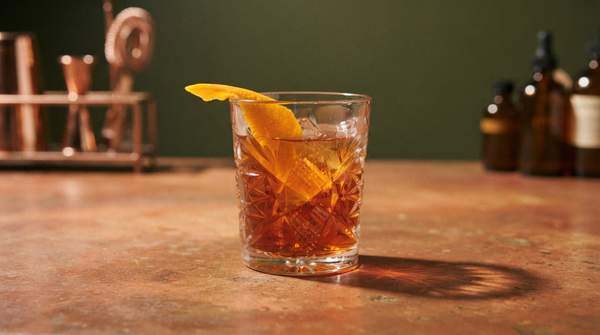
The Old Fashioned is the entry point. Chris Tunstall of A Bar Above calls it one of the oldest cocktail recipes around and a drink both enthusiasts and novices love; Michael Ruhlman goes further, recommending a fine spirit for what he calls "this simplest of cocktails." The build is whiskey, bitters, and sugar—Ruhlman, citing Robert Simonson, notes the three-ingredient granddaddy got its name in the late 1800s. Traditionally it was rye; bourbon is a common substitute that yields a sweeter, smoother profile. Stir, garnish with orange peel, done.
The Manhattan adds one ingredient—sweet vermouth—and a straining step. The Epicurean Trader's recipe uses 60 ml rye, 30 ml sweet vermouth, and two dashes of Angostura, stirred about 30 seconds until cold, with a maraschino cherry. The logic of the drink is rye's spiciness cutting through the vermouth's sweetness. Robb Report's writers add a caution worth heeding: with Manhattans, the specifics are everything, and a vermouth that works with one whiskey may not work with another.
The Sazerac is the most theatrical: rinse an ice-chilled glass with absinthe and discard the excess, muddle a sugar cube with Peychaud's bitters in another glass, add rye and ice, stir briskly, then strain into the prepared glass and garnish with a lemon twist. It's a multi-step drink, but every step is simple in isolation.
Modern Twists: The American Trilogy
If one drink on this list tastes most like fall itself, it's the American Trilogy. Robb Report's recipe pairs equal parts rye and apple brandy with a quarter ounce of demerara syrup and two dashes of orange bitters, stirred briefly in a rocks glass over big ice and garnished with an orange peel. The writers' rationale is direct: rye and apple brandy are fast friends, with the apple brandy adding an autumnal echo to rye's grainy persistence.
It's a stirred drink like the others, so the technique is intermediate at most—but it requires apple brandy, which not every home bar stocks. If you have it, this is the cocktail that turns rye's spice profile into something unmistakably seasonal.
Choosing Your Fall Rye Cocktail
Map yourself onto the matrix. If you want spice with minimal effort, the Old Fashioned is the answer—its beginner rating assumes only basic familiarity with stirring. If you want richness and have sweet vermouth on hand, the Manhattan rewards the extra ingredient. If you enjoy process and aromatics, the Sazerac's absinthe rinse delivers complexity the others can't. And if apple is your fall flavor, the American Trilogy is the purpose-built choice.
One honest limitation: this is a curated four, not an exhaustive survey, and it deliberately skips bourbon recipes except for comparison. Brands are likewise left to your shelf—sources name examples like High West Double Rye, but nothing here requires a specific bottle.
Your Next Fall Rye Cocktail Awaits
Choose a rye whiskey cocktail that aligns with your flavor preference (spicy, rich, dry, or crisp), the number of ingredients you have on hand, and your comfort with basic cocktail preparation techniques. The measurable indicator of success is simple: a successfully prepared and enjoyed rye whiskey cocktail, indicated by its taste matching the described profile and the preparation process being manageable. Make one tonight, and if the rye Old Fashioned lands, the Manhattan is your natural next step.
Sources
- Fall Whiskey and Bourbon Cocktails — The Liquor Bros
- Fall Whiskey Cocktails: Bourbon vs. Rye — Open Road Distilling Co
- Old Fashioned Recipes & Twists with Pendleton®️ Whisky — Pendleton® Whisky
- The Old Fashioned - A Bar Above
- FCH: The Rye Old-Fashioned - Ruhlman
- 5 Classic Rye Whiskey Cocktails You Can Make At Home — The Epicurean Trader
- The 10 Best Rye Whiskey Cocktails to Make This Fall — Robb Report