In 2025, while brands such as Bar Louie and Hooters navigated bankruptcy filings, Chili's, a prominent casual dining chain, reported record-breaking same-store sales, signaling a profound divergence in the restaurant sector's fortunes. The profound divergence in the restaurant sector's fortunes highlights a period where operational agility dictates survival, affecting livelihoods across the industry.
The broader restaurant industry faces considerable economic headwinds and a wave of bankruptcies, yet a select group of casual dining chains demonstrates notable growth. The broader restaurant industry facing economic headwinds and a select group of casual dining chains demonstrating notable growth illustrates a critical juncture where established models either adapt or decline.
Based on this divergent performance, the restaurant landscape rapidly bifurcates, rewarding agile, value-driven casual concepts and punishing traditional models that fail to innovate.
Chili's recorded record-breaking same-store sales in 2025, according to Restaurant Dive. Chili's record-breaking same-store sales in 2025 underscore a market that still values accessible dining when executed with precision. Dine Brands posted same-store sales growth at Applebee's in the same year, and IHOP, another legacy brand, achieved positive traffic for the first time since 2015, as reported by Restaurant Dive. Such figures challenge simplistic narratives of industry decline. First Watch also built 64 new units and saw positive same-store sales in 2025, further illustrating this trend, Restaurant Dive stated. The surge in performance among established casual brands suggests a significant change in consumer preference toward accessible, value-driven dining experiences. The market rewards those who evolve their offerings, moving beyond mere price competition to comprehensive value. The market rewarding those who evolve their offerings contradicts a singular narrative of industry-wide decline; instead, it indicates a transformation where only adaptable entities endure.
The Playbook for Casual Dining's Resurgence
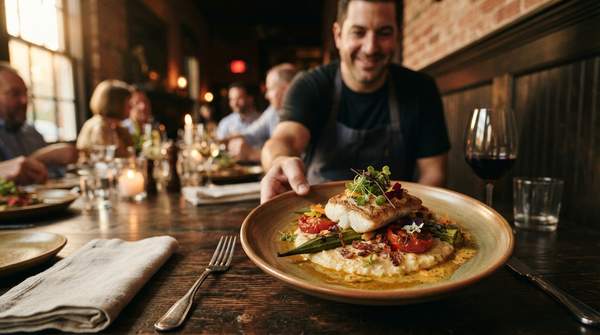
Top-performing casual chains now employ specific strategies to capture market share and sustain growth. These brands expand their value propositions beyond mere price, prioritizing enhanced on-premise experiences, and strategically opening new restaurants in second-generation spaces, according to Restaurant Dive. Strategically opening new restaurants in second-generation spaces allows for cost-effective growth and market penetration, bypassing the higher capital expenditure typically associated with new construction. The emphasis on the guest experience, from service quality to ambiance, aims to differentiate these establishments in a crowded market.
The strategic adoption of second-generation spaces by top-performing casual chains, as noted by Restaurant Dive, suggests that smart real estate decisions are as crucial as menu innovation, allowing agile brands to expand efficiently while others contract. The strategic adoption of second-generation spaces moves beyond simple price points to a more holistic understanding of value, encompassing both the dining experience and operational intelligence. The success of chains like Chili's and Applebee's, alongside the struggles of brands like Bar Louie, suggests that 'casual dining' is no longer a monolithic category; rather, it operates across a spectrum where adaptability in value and experience dictates survival. A refined focus on customer engagement and operational efficiency appears to be the primary differentiator in securing market relevance.
The Cost of Stagnation
In stark contrast to the growth seen in agile casual dining, several established brands faced severe financial distress in 2025. Brands such as Bar Louie, Pinstripes, Razzoo's Cajun Cafe, and Hooters filed for bankruptcy during this period, according to Restaurant Dive. The bankruptcies of brands such as Bar Louie, Pinstripes, Razzoo's Cajun Cafe, and Hooters illustrate the unforgiving nature of a market that demands constant evolution. The operational failures and inability to adapt to shifting consumer desires proved insurmountable for these entities, leading to their commercial demise.
The wave of bankruptcies among less adaptable full-service brands underscores a critical market culling, where only the most innovative and responsive concepts will survive and flourish. Companies clinging to outdated full-service models are trading market relevance for inertia; based on Restaurant Dive's reporting, the stark contrast between thriving and failing chains proves that innovation in value and experience is now a non-negotiable for survival. The simultaneous growth of some casual dining brands and the bankruptcy of others highlights a critical bifurcation: the market rewards chains that innovate their core offering and penalizes those that maintain a stagnant, traditional full-service model. The record-breaking sales at Chili's and the positive traffic at IHOP, according to Restaurant Dive, indicate that the 'death of casual dining' narrative is a misnomer; rather, it is a 'transformation of casual dining' where only the adaptable will endure and thrive. This discernment by consumers ultimately shapes the industry's future.
By Q3 2026, the ongoing divergence in the restaurant sector suggests that brands like Chili's, which reported record-breaking sales in 2025, will continue to consolidate market share, leaving less adaptable competitors struggling to maintain relevance. The ability to pivot towards enhanced on-premise experiences and diversified value propositions will define the winners in this evolving market.